AI is powerful, but its success depends on how you prepare. Learn the six key practices that help nonprofits implement AI responsibly and achieve real results.
AI is only as good as the data it's fed. Before implementing AI, invest time in cleaning, organizing, and documenting your donor databases, grant records, and program data.
Assess what data you have, where it lives, and its quality. Identify gaps and duplicates.
Remove duplicates, fix errors, and standardize formats so AI can work with consistent information.
Create rules for how data is entered, updated, and maintained going forward.
Bring data together in one accessible place rather than scattered across spreadsheets and systems.
Create a clear, ethical framework that guides how your nonprofit uses AI. This protects your donors, clients, and staff while ensuring AI decisions align with your mission.
Articulate your organization's values and how AI should reflect them. Address bias prevention and fairness.
Protect sensitive donor and client information. Ensure compliance with GDPR, HIPAA, or other relevant regulations.
Decide when and how to disclose AI use to donors, clients, and stakeholders.
Define who is responsible for AI outcomes and establish audit trails for key decisions.
Never automate away human judgment. Ensure that important AI-driven decisions and generated content are reviewed by a person for accuracy, appropriateness, and alignment with your brand and mission.
Have staff review AI recommendations for large grants, major donor outreach, and sensitive program decisions.
Have your communications team review and edit social media posts, emails, and grant proposals before publication.
Check AI output against source data to catch hallucinations or errors before they affect donors or programs.
Use human review insights to train AI to better understand your nonprofit's voice and preferences over time.
Fear of AI is natural. Overcome it by investing in training and fostering a culture of experimentation where staff can learn AI skills and feel empowered to try new approaches.
Offer workshops or courses on AI fundamentals, ethics, and practical use. Start with your champions and expand.
Assign someone to champion AI adoption, answer questions, and coordinate implementation across your organization.
Allocate time for teams to experiment with AI tools, test ideas, and learn from failures.
Celebrate wins and share how AI is making your team's work easier, inspiring others to embrace it.
Don't try to apply AI to everything at once. Identify specific, high-impact problems where AI can deliver the most value for your nonprofit.
Ask your team: What tasks take too long? What decisions are delayed? What information is lost? These are prime candidates for AI.
For each use case, define success metrics. Are you saving time? Finding more funds? Improving donor retention? Make it quantifiable.
Pilot AI in one department or for one use case. Learn, refine, and then expand to other areas based on what works.
Focus your AI efforts on the use cases that provide the highest return on investment in time, money, or impact.
You don't have to build AI from scratch. Partner with experts and use tools designed specifically for nonprofit needs.
AI implementation isn't without challenges. Understanding the risks and implementing safeguards helps nonprofits harness AI's power safely and responsibly.
Never input PII into AI tools. Anonymize prompts and ensure sensitive data stays protected.
Employ VPNs and secure cloud providers to protect data in transit and at rest.
Keep up to date with GDPR, EU AI Act, and other legislation relevant to your jurisdiction and operations.
Evaluate potential risks before deploying any AI tools or systems in your organization.
Be open with staff, beneficiaries, and donors about when and how you're using AI. Build trust through honest communication.
AI success isn't just about technology—it's about preparation, people, and purpose. The nonprofits that get the most value from AI are those that:
When you get these right, AI becomes a powerful ally in achieving your mission.
We've created practical, easy-to-use materials to help your nonprofit start conversations, train staff, and implement responsible AI practices right away.
Three downloadable flyers designed for staff training and awareness:
Quick-reference guides to support ongoing implementation:
A comprehensive policy template inspired by the Institute's internal governance framework. Use it as a starting point for developing your organization's own AI policy, ensuring responsible use aligned with your values and mission.
Nonprofits can join our free CyberPeace Builders network to access comprehensive AI Skills for Nonprofits resources, training modules, and ongoing support from expert volunteers.
Access all AI skills flyers, best practices guides, and policy templates in one place.
Learn through structured training on AI implementation, ethics, security, and responsible use.
Connect with experienced professionals who volunteer to support nonprofit AI adoption.
Share experiences and best practices with other nonprofits on their AI journey.
Whether you're just getting started or looking to scale, join at no cost.
All of our resources – flyers, best practices guides, policy templates, and training modules – are available through the free CyberPeace Builders network. Join today to take the next step in your nonprofit's AI journey with confidence.
We'll help you build a strong foundation, establish responsible practices, and develop the expertise your team needs to use AI effectively and ethically.
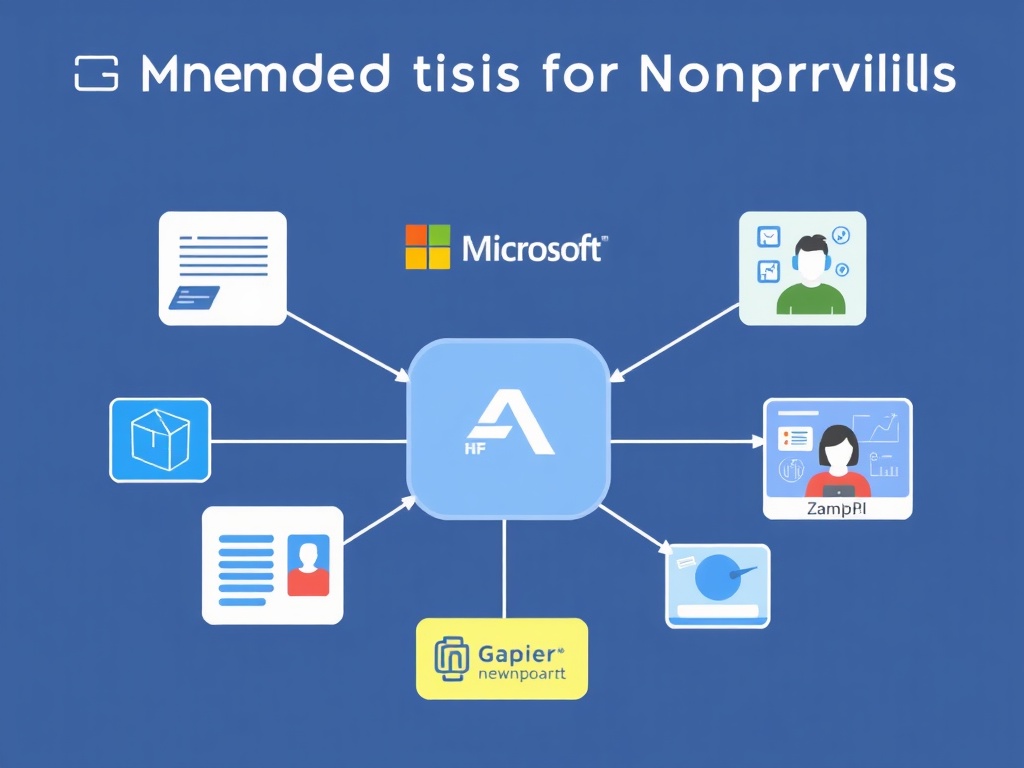
Get Started TodayTo help you get started quickly, we've curated a selection of proven AI tools designed for nonprofit workflows. Each tool addresses specific nonprofit functions and has been vetted for ease of use, cost-effectiveness, and nonprofit compatibility.
Microsoft 365 AI Assistant
Copilot is an AI assistant integrated directly into the Microsoft 365 ecosystem that helps draft, edit, and summarize grant narratives and proposals.
Free–$30/user/month
Design Platform
Gamma is a graphic design platform that facilitates the creation of presentations, documents, webpages, infographics, and more.
Free–$15/seat/month
Workflow Automation
Zapier automates repetitive administrative tasks while connecting various apps and services.
Free–$69/month
Analytics & Reporting
Microsoft Power BI is a Microsoft add-on tool that allows users to create reports, visualize data, and share insights. It can be combined with Microsoft Copilot 365 for AI data insights.
Free–$10/user/month
Meeting Assistant
Zoom AI Companion simplifies meeting management by automatically completing tasks during the meeting.
Free with paid Zoom account
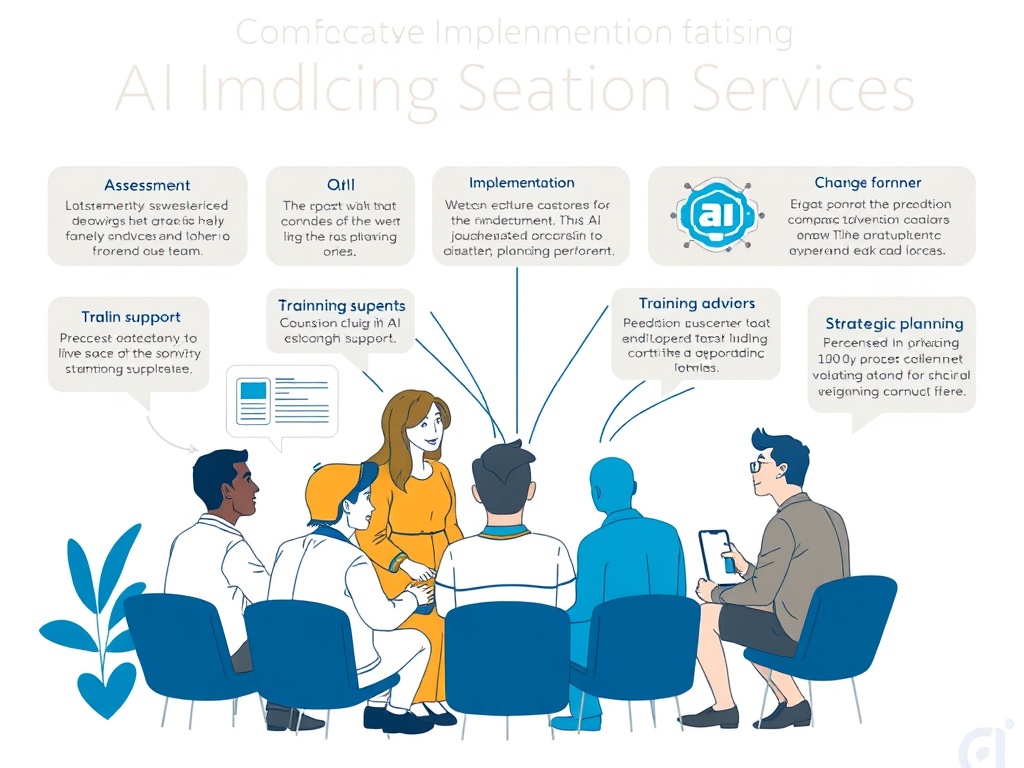
Having an AI expert help with implementation can help you get up and running faster—and smarter. AI Impact Forge has comprehensive nonprofit-specific AI implementation experience and can guide your organization through every step of the journey.
Through comprehensive analysis and qualification, we create a high-ROI custom action plan that addresses your nonprofit's specific needs with AI solutions.
Low-tech experience? No problem. We handle technical AI integration across teams, connecting AI tools to your CRM and existing platforms to automate administrative burdens.
Our team sets your nonprofit up for long-term success with a comprehensive training regimen. We work with you to build your internal AI policies and deliver customized staff training, fostering a culture of confidence and safety.
AI constantly evolves, so even after your initial integration, you need to remain alert to new opportunities. We provide ongoing analysis and regular strategy sessions to ensure your organization stays ahead of the curve.
We'll guide you through preparation, implementation, and optimization every step of the way.
Get Started with AI Agents